Morton Castle: Galloway's Hidden Grand Hall In The Hills
As another lovely summer in Galloway was coming to an end, it seemed like the perfect time to visit a secluded castle in southern Scotland: Morton Castle.
Nestled in the hills above Carronbridge, it is full of interesting history and surrounded by splendid nature as well. It is well hidden, up winding roads, tucked up the hills with only a few houses nearby to disturb these ruins.
The Journey
The trip to the castle starts from Dumfries as always, this time travelling up the A76 towards Thornhill. As we drove up the roads towards the castle, you could start to see some of the signs of autumn appearing. The occasional tree with browning leaves, absurd amounts of roadworks and, of course, tractors with hay bales.
Masked, of course, by a road full of motorhomes and cars with tent boxes on top.
Once you hit the interesting village of Carronbridge, which feels like the last settlement before you leave civilisation, you hit the hills and start climbing up tracks that, if I am honest, are only for a car with very good suspension.
The track is flanked by trees, which only adds to the sense of suspense as you get closer to the castle. On a sunny day, the light filtering through the trees gave the whole journey an almost off-road adventure feel.
Like a scene from a film just before everything goes horribly wrong.
Mainly because some of the potholes were so big they had formed mini-lochs when filled with rain.
Eventually, you arrive and see a little part of the castle popping up above the dyke in front of you. The feeling that this castle has been discovered certainly is earned.
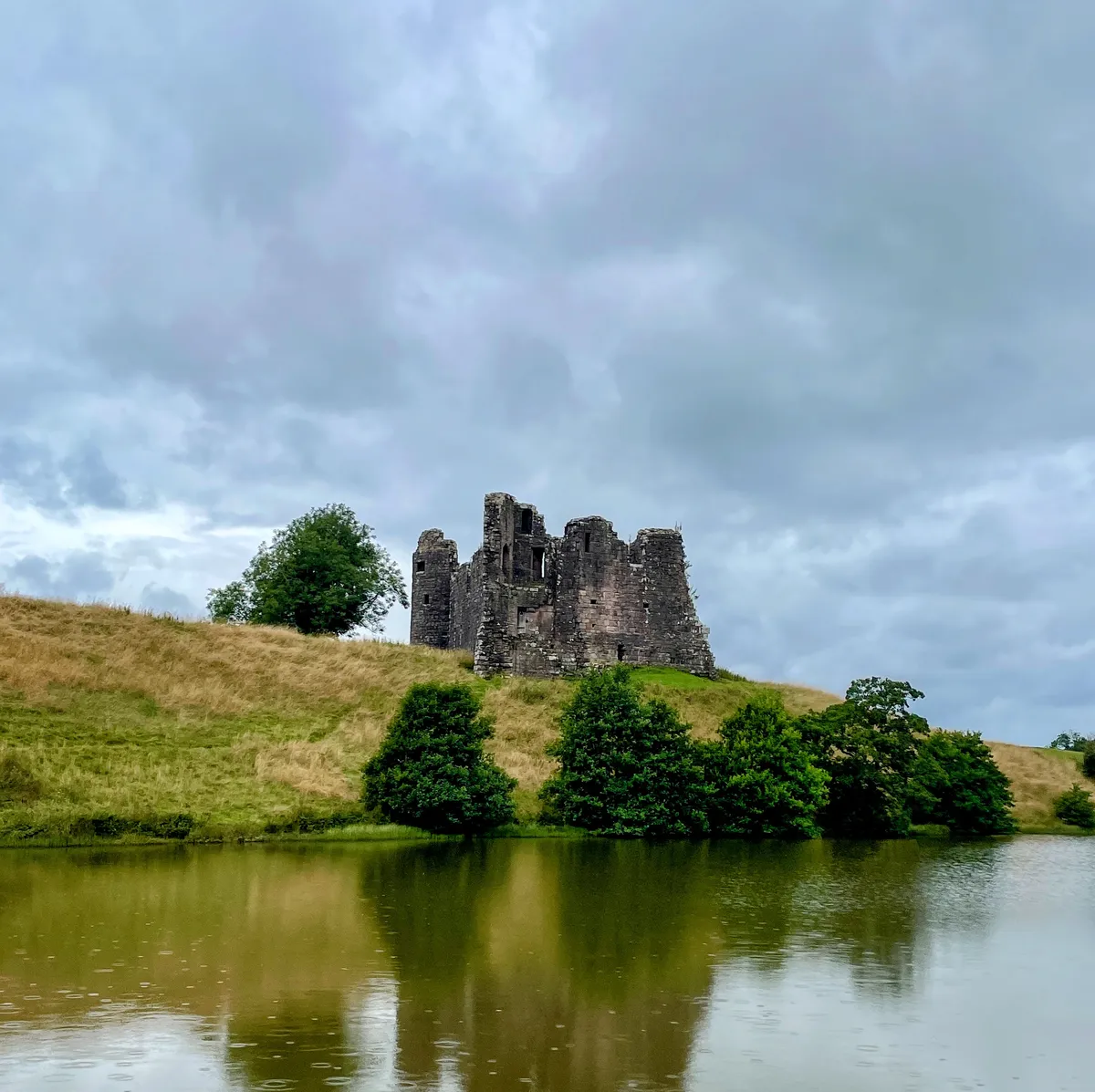
Morton Castle as viewed from the Loch
Morton Castle
The castle is nestled inside what I can only describe as the head of a valley, above a natural bowl formation that now hosts a loch (and lots of wildlife).
As you go through the gate, it is more than abundantly obvious this is one of Historic Scotland's lesser-visited sites. The hedges have claimed the gate and the grass is growing tall off the path.
The castle is a wonderful reward for the journey up. The castle is in good condition, although it is still a ruin. The walls are still of a height that means you need stairs to enter the main hall. It still has remnants of the towers that formed visitor quarters and the lord's living quarters. It is expected that this is the lord's quarters, as the fireplace is still visible and ornate.
You can also walk on the floor that housed the kitchens and storage areas of the lodge and see the stone lintels that held up the floor of the main hall. The windows for letting smoke and water out from the kitchen and the main fireplace for cooking.
You can also walk around the outside of the walls and get a wonderful view of the loch below, which, incidentally, is only a couple of hundred years old and is man-made.
The castle is also triangular, which seems to be a Galloway castle design quirk.
History of the Castle
The history of the castle is sparse but fascinating. There have been castles on the site since around the 1100s in different forms.
After the Treaty of Berwick (1357), which was a glorified hostage agreement for King David, it was demolished along with other Nith Valley castles. As part of the agreement between England and Scotland, the castles were demolished; the ransom, however, the King of Scotland never paid in full.
It was later rebuilt and repurposed, and the current incarnation is debated as to whether it is from the 14th or 15th century.
The castle was not a fortification as we think of today. A better way to see the current incarnation of the castle is as a defendable hunting lodge for its various owners down the years. The surrounding countryside included a deer park to ensure their lordships had suitable game.
The castle has had a number of owners down the years, including the Lords of Strathnith, Lords of Moray, Earls of Morton and was last held by Lord Maxwell.
Lord Maxwell sadly had his possession burnt by the King of Scotland, James IV, during a campaign against the Catholic Maxwells in 1588.
It was still used as a hunting lodge until around 1714, and is now owned by the Duke of Buccleuch.
Want to read more articles like this? Sign up to the newsletter
Nature
There is, in addition, a nature trail around Morton Castle and the surrounding woods and hills. On this visit, we did not go on the walk as part of the trail was untraversable due to groundworks being dug for drainage.
However, just around the castle there is a delightful amount of wildlife. We saw newts, kites, swallows, pigeons, lacewings, dragonflies, midges, flies, bees, wasps, beetles (numerous kinds) and hairy caterpillars.
I also spied some mushrooms; however, at this point it started to rain, so I never got to look closely at them.
I had never seen every NIMBY's favourite animal, the newt, before. That is an excellent find. We spotted them on the lochside of the castle. Keep an eye out; of course, enjoy looking, but leave them be.
The presence of newts also means no one will be doing a 'Grand Designs' conversion of the castle anytime soon.
Picnic Spots
The best picnic spot is down by the loch, by the bench. You get a great view of the castle, loch and woods.
What You Need to Know Before Visiting
How do you get to Morton Castle from Dumfries?
From Dumfries, travel up the A76 to Carronbridge, turn onto the A706 and take the second turning off and head towards Morton Mains. Once you come across Morton Main, continue up the track until you see a wooden sign pointing towards Carronbridge Glen.
How do you get to Morton Castle from England?
From England, head to Dumfries, and head to the A76 and follow the above direction.
How do you get to Morton Castle from Glasgow, Edinburgh and Northern Scotland?
From the Central Belt and Northern Scotland, take Exit 14 (near Abington Services) and follow the signs for Drumlanrig or Thornhill and carry on down the A76 until you hit Carronbridge and follow the above direction.
Is there parking?
You can park near the gate. The road is quiet and there are roadside places to park.
Is there an admission price?
No, it is free. Although I do suggest joining Historic Scotland.
How long do you need?
A couple of hours to an entire day, depending on whether you picnic and go for a hike and explore the surroundings.
Is the track suitable for cars?
Yes, just avoid the potholes.
Is the castle wheelchair accessible?
No.
Are dogs allowed?
Yes.
Is it open year-round?
Yes.
Learn More About Morton Castle
Historic Environment Scotland has a page dedicated to the castle.
Wikipedia is, of course, a fountain of knowledge on the subject, and if you want to know what other people think, you can always go to Tripadvisor.
Was the Trip Worth It?
Yes, Morton Castle is a nice, tucked-away slice of Galloway's rich history and nature. It receives a trickle of visitors compared with Drumlanrig, and we had the place to ourselves. A superb place to spend an afternoon.
Thank you for reading this article. I appreciate you taking the time to read my thoughts, especially in today's busy and hectic world.
Join the Newsletter and stay up-to-date
Again, thank you for taking the time to read this article. I really appreciate it.
Joseph "Home Working" Henry