Old-School Children's Television Hits Different: Why You Should Be Making Space for Thomas the Tank Engine, Postman Pat, and Rosie and Jim
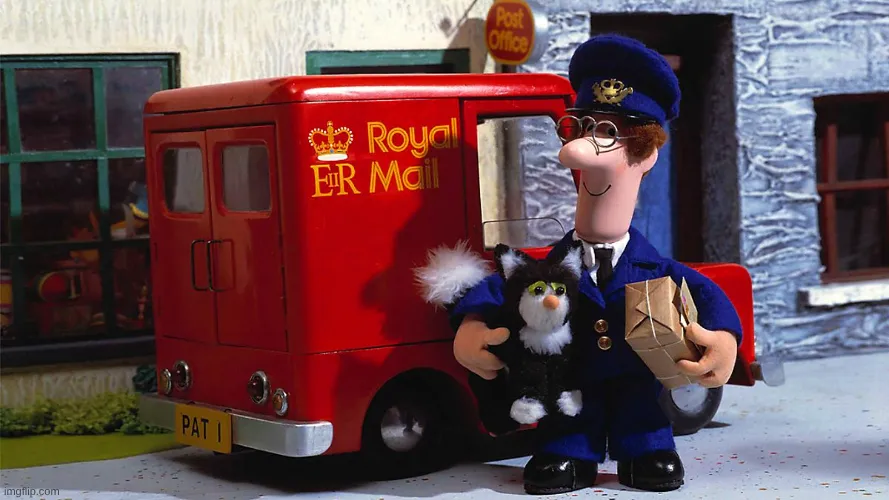
There is something very charming about old-school children's television shows like Thomas the Tank Engine, Postman Pat, Fireman Sam, Tots TV, Rosie and Jim and Come Outside with Auntie Mabel.
They represent an ethos of children's television that has been annihilated by the twin needs of toy makers and advertisers.
Older shows like these offer a vision for children's television that has been lost by almost everyone but a few holdouts at the BBC. Now, I am using "television" to mean any programme, whether on live TV, iPlayer, streaming or YouTube.
Why Are Older Shows Better?
Although older children's television was still commercially minded, the child remained at the centre of the production. There was less research into learning and development back then, yet there seemed to be a more straightforward attitude that programming had to have intrinsic value. The pace is slower, giving children time to take in what they are seeing.
They also treat children with a level of respect, intelligence and wisdom that is so often lacking in modern children's television. Postman Pat and Rosie and Jim, for instance, both had creative input from John Cunliffe, children's author and former librarian and teacher. This comes through in the stories. Rosie and Jim always has a core learning point, whether it is about rollercoasters or railways. Postman Pat teaches core social lessons: community, tenacity and getting along with people, lessons born out of the writer's own childhood experience of being bullied for being very tall.
Soundtracks also leaned on the sounds of nature in Postman Pat and Thomas. Often in Postman Pat you can hear birds singing; in Thomas, rain falling, wind blowing and the noises of a busy railway.
Thomas is full of tricky challenges and social situations, resolved with panache and a rich vocabulary.
Characters also act as role models: Ted Glen from Postman Pat fixes things, and the Fat Controller shows fairness, firm but kind authority, and workplace humour.
Come Outside, presented by Auntie Mabel and her dog Pippin, shows little snippets of life, from going on a bus to visiting a welly boot factory, much like Rosie and Jim.
Of course, not all old children's television was good television. I also watched He-Man, Transformers and M.A.S.K. Many 1980s cartoons were built to sell toys, so the merchandise model is not new; it is just more effective now. Several of these shows also carried strong anti-communist themes, with Cold War battles between good and evil baked into the storylines.
And of course there was merchandise. I personally loved my ThunderCats light-up sword.
Children's TV Today
Look at modern programming: the colours are garish, something new happens every two to four seconds, the soundtracks are artificial and grating, and the dialogue is repetitive with a sparse vocabulary.
Programmes like Paw Patrol, CoComelon, modern Thomas & Friends and Gabby's Dollhouse are built around two goals: keeping the child's eyes on the screen and, when they are away from it, getting them to pester for merchandise.
Bluey is an interesting case. It has great values and a wonderful ethos, but its animation style leans too heavily on modern, addictive formatting. It is also, in my opinion, aimed at parents to make selling the merchandise easier. But that's my opinion.
Why Has It Got Like This?
There are a number of explanations for the decline in quality children's television. They notably come down to the following: the rise of satellite and cable television, increased commercial and advertising pressure, the rise of iPads and smartphones, YouTube and streaming services, and analytics.
The expansion of television channels increased the need for more children's programming and opened up a far wider advertising space to create pester power. Once streaming came on board, this was amplified by the competitive need to hold attention.
Add analytics that show production companies exactly when children switch off, plus ever-cheaper production, and you get a system where nonsense like Skibidi Toilet can flourish (or should I say flush?).
Skibidi Toilet was never even made as children's television; it is a YouTube Shorts series that children found through the algorithm.
Modern children's television has an optimisation problem that, without regulation, leads us to what we have now: a race to the most addictive TV show with the best merch click-through rates.
What Can Be Done?
Lots. The first and most important way to deal with this is to fight against the tide of poor-quality shows by not allowing them on the television or tablets. This does require effort and limitations.
Only by reducing engagement with poor-quality programming and increasing viewership of higher-quality shows can there be a change. More importantly, like reading good-quality books, it will have benefits for children as well: less agitation and fewer dopamine withdrawals.
It is also worth seeking out newer shows with the same ethos, such as Sarah & Duck.
Of course, pester power is the second most powerful force in the world, but hitting capitalism's bottom line is the most powerful.
The Benefits
Putting on slower, older children's television programmes will have a diverse range of impacts:
- The programming is quintessentially British. No transatlantic accents here: children hear British voices.
- Re-enactment of the programmes in play will be gentler.
- Children will hear a diverse range of vocabulary pronounced in a British style.
- Less stimulating television means a calmer reaction when screen time is up.
- Conflict resolution is modelled in a more realistic and British way.
- Regional life and dialects are shown, instead of weird proto-American landscapes.
The Drawbacks
- Finding toys will be a pain.
- You will talk about trains, post vans and canal boats more than you realise.
- They might get bored and go and play instead. Terrible.
A Slow TV Watchlist
- Thomas the Tank Engine: Series 1 to 5 (1 and 2 are the Ringo Starr ones)
- Rosie and Jim: adventures on a canal boat in the Midlands
- Postman Pat: Series 1 and 2
- Fireman Sam
- Come Outside (with Auntie Mabel and Pippin)
- Tots TV
- Kipper
- Button Moon
- Sooty and Sweep
- Pingu (I learnt today this is Swiss, not Icelandic!)
- Sarah & Duck: a modern show
Final Thoughts
In a world of streaming, the internet and busy lives, it has become almost impossible to manage the content that comes into your children's lives without rigorous and constant vigilance. But putting in the effort does have massive benefits. I have never been perfect, and I am not preaching perfection. What I am preaching is that older shows put the child at the centre, for their benefit, rather than serving the needs of an over-optimised, engagement-obsessed, late-stage capitalist business model.
That is what matters: the child should be at the centre, along with their development, their enjoyment and their childhood. Far too much of modern children's television is simply not suitable for children, and we all need to take little steps against it. The rubbish will still be made and the nonsense will still be created, but through applied action, we can ensure there is less of it.
I would love to hear any suggestions for slow, child-centred TV in the comments.